What ETEGY can be held to.
A firm can be judged on three things: the method it delivers through, the artifacts it leaves behind, and the standard it holds its own numbers to. All three exist independently of who is in the room, and all three are published below.
Zero-Based Transformation™
Nothing assumed — not the problem, not the work, not the number. Every engagement is delivered through it, and it produces the same artifacts regardless of who runs it.
Yours to keep
Transformation Architecture, Enablement Blueprint, decision agenda, evidence register. Produced by a method rather than a personality, and they outlast the engagement.
Stated evidence class
Modeled, underwritten, validated and delivered mean different things. Every figure we publish says which one applies. That is the discipline the firm can be held to.
“What surprised me was how quickly the picture became undeniable. We had done the blue-chip consulting exercise before; this was different. The transformation finally felt like something we could run — not a deck we were expected to admire.”
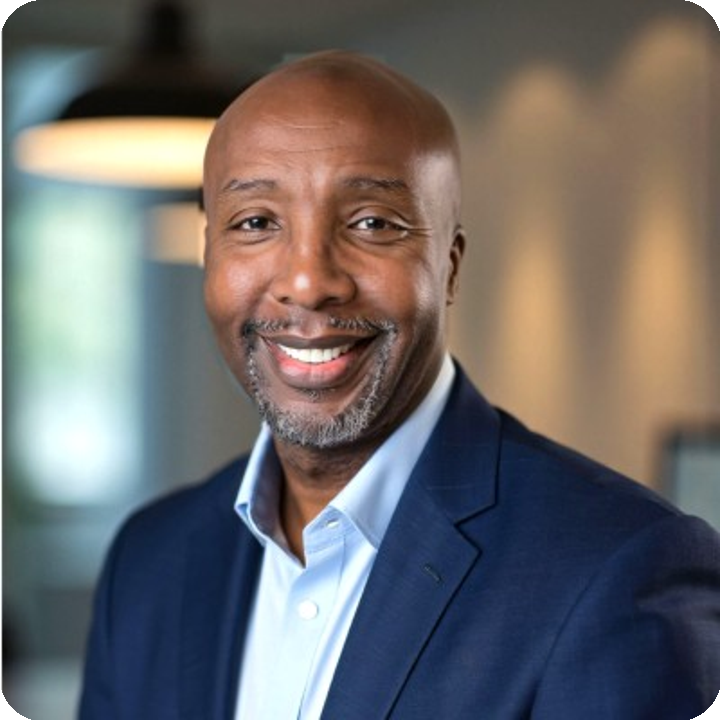
When transformation becomes material, evidence is the standard.
Darrin Devereaux has led change where the stakes were real and the scrutiny constant — across 60+ transformation mandates in services organizations from $400M to $20B. He’s brought in at the point a board or PE sponsor has made an operating risk visible and management needs it converted into a governed mandate — credible diagnosis, accountable ownership, funding gates, and measurable value recovery. Time and again, the same question went unanswered: did the operating model actually change, and could anyone prove it?
That question became the work. It produced Zero-Based Transformation and GSDPI™ — a method built in the field across those mandates and now formalized through his doctoral research in strategic management: a disciplined way to read the operating model, change it, and prove the change held. It is the discipline ETEGY is built on.
Strategy
Smart strategies fail when organizations cannot execute them.
ETEGY began with a simple idea: smart strategies fail when organizations cannot execute them. The name itself is a contraction of executing strategy.
That starting point led directly to transformation — the work of changing the operating system so strategic intent can become operating reality. Transformation was never the point. It is the mechanism.
Which is why the body of work runs from strategy through operating model, program and portfolio, governance, value realization, the TMO and executive leadership. Not an arbitrary menu of services — one continuous problem, addressed wherever it breaks.
The field got very good at launching transformation, and never learned to prove it.
Most firms measure transformation by motion — initiatives launched, milestones hit, adoption reported. The result is a category that can't agree on why most efforts fail, because it has no shared standard for what "changed" or "worked" means.
"If the operating model didn't change, it wasn't transformation — it was expensive activity."
ETEGY was founded to close that gap. We treat the operating model as the subject, read it in its actual state, and hold the change to a standard a board can defend. Not a bigger program. A provable one.
The hardest part of transformation is the operating model itself.
Not the technology. Not the change program. Not the reporting. Those are the parts most visible, most funded, and most often mistaken for the work — and each of them inherits its difficulty from a layer underneath that nobody owns.
Inherits the model
A platform automates the operating model it finds. Where that model is undefined, the build scales the exception instead of removing it.
Inherits the model
Adoption can only carry people to a way of working that exists. Where the model did not change, adoption is asked to hold something that was never built.
Inherits the model
A forum can only decide what the model gives it authority over. Without decision rights in the operating model, governance reports and cannot correct.
Inherits the model
A benefit is only traceable if the work that produced it was governed. Where it was not, the number reconciles but cannot be proven.
This is why ETEGY starts at the model rather than at the adjacency that hurts. The operating model sets the tone, quality, focus, intensity and depth every adjacent discipline can achieve — and each of them is capped by it. Correct the model and the adjacencies get easier; correct an adjacency and the model absorbs the correction. Why the operating model is the subject →
Three commitments that define the firm.
Evidence before opinion
We start from the operating model's actual state — what the system really does, not what the org chart claims. The read comes before the recommendation.
The model is the subject
Not the strategy above it or the tools around it. We change how work converts to value — and if that didn't change, we don't call it transformation.
Proof, not declaration
Every engagement is built to leave a defensible baseline — evidence the change is real and holds, not a slide that says success.
Executives who own the outcome, not the activity.
ETEGY works where a transformation is consequential enough that someone will be asked to defend it — usually in services-heavy organizations between $400M and $20B, where the operating model spans more functions than any one leader controls.
Boards & investors
Directors and investors who need results that hold up when they're tested.
CEOs, COOs & CXOs
Executives who own the outcome and need the operating model to deliver it.
PE operating partners & transformation leads
The people accountable for making a value-creation plan real — and provable.
Sponsors of programs in motion
Executives who need upfront scoping, a course correction, or a rapid program turnaround.
Seven executive problems. One disciplined way through.
Seven case studies, written the way we would defend them — with the arithmetic shown, the assumptions named, and the difference between a claimed benefit and an underwritten one made explicit.
The portfolio was full. The strategy wasn’t.
$142M reconciled to $78M underwritten and $70M committed before funding.
The platform was ready. The operating model wasn’t.
$62M modernization tested against operating requirements before build.
The transformation was green. The value wasn’t.
An $84M program 18 months in; $18M of investment protected or redirected.
The cost target was clear. The path to it wasn’t.
A $25M mandate modeled as $21.8M of annualized structural run rate.
The board had status. It didn’t have proof.
$120M board-visible benefits reconciled to $79M attributable.
AI saved time. Finance couldn’t count it.
288,000 released hours; 100,800 economically converted.
The contact center was solving problems the business created.
1.2M assisted contacts read by origin; 169,000 modeled as removed at source.